The Real Trapp Family: From Austrian Singers to Sound of Music Inspiration
The story of the Trapp Family, immortalized in the beloved musical *The Sound of Music*, is one that captivates hearts worldwide. Yet, behind the cinematic charm and heartwarming melodies lies a true narrative of resilience, faith, and an extraordinary musical journey. Far from being merely a fictional tale, the real Trapp Familie faced immense challenges, navigated a changing political landscape, and shared their unique musical gift with the world, establishing a legacy that continues to resonate today. This article delves into the authentic history of the von Trapp family, exploring their origins, their rise to fame as the "Trapp Family Singers," their daring escape from Nazi-occupied Austria, and their enduring impact long after the curtain fell on their performing career.
The Genesis of the Trapp Familie Singers: A Family Forged in Melody
At the heart of the Trapp Familie's story was Captain Georg von Trapp, a decorated naval hero of the Austro-Hungarian Empire. A widower with seven children – Rupert, Agathe, Maria Franziska, Werner, Hedwig, Johanna, and Martina – he sought a governess for his children, which led him to Maria Kutschera in 1926. What began as a professional arrangement soon blossomed into love, and Georg and Maria married in 1927, subsequently having three more children together: Rosemarie, Eleonore, and Johannes.
Music was an integral part of life in the von Trapp household, a source of comfort and joy. Both Georg and Maria, along with all ten children, possessed natural musical talents. Their home in Aigen, near Salzburg, often echoed with folk songs, madrigals, and ballads. This family pastime transformed into a more disciplined art form with the arrival of Dr. Franz Wasner, a young priest who became their spiritual and musical director in 1935. Wasner recognized their raw talent and helped them refine their sound, teaching them sacred music and classical pieces that elevated their performances.
The family's amateur performances eventually caught the attention of renowned German concert singer Lotte Lehmann, who heard them sing at their home. Deeply impressed, Lehmann encouraged them to enter the prestigious Salzburg Festival competition in 1936. To their delight, the Trapp Familie won first prize, a pivotal moment that propelled them onto the professional stage. This victory, combined with severe financial losses suffered during the Great Depression, necessitated that their beloved hobby become a profession. Soon, accompanied by Dr. Wasner, the family embarked on tours across Austria and Europe, charming audiences in Vienna, Salzburg, France, Belgium, the Netherlands, Italy, Germany, and England with their pure, harmonious voices.
A Symphony of Survival: Escaping the Shadows of War
The idyllic life and burgeoning musical career of the Trapp Familie were dramatically threatened by the tumultuous political climate of the late 1930s. In 1938, Adolf Hitler's Germany annexed Austria in what became known as the Anschluss. This event brought the oppressive Nazi regime directly to their doorstep. The von Trapps, devout Catholics with strong anti-Nazi convictions, faced increasing pressure to conform, including displaying Nazi flags and allowing their children to join Nazi youth organizations – demands they vehemently refused.
Understanding the grave dangers to their spiritual and physical freedom, the family made the courageous decision to leave their beloved homeland. This was not a whimsical decision, nor was it as simple as hiking over the Alps as depicted in the musical. The reality was a carefully planned, perilous escape. Georg von Trapp's legal citizenship in Italy (due to his birth in Zadar, then part of the Austro-Hungarian Empire) provided a crucial lifeline, allowing them to travel to Italy first.
Their escape involved leaving their grand estate and most of their possessions behind. As
Escaping Hitler: The Trapp Family's Daring Flight to America details, their journey was complex, involving trains across the Austrian Alps, crossing the border into Italy, then moving through Switzerland and France to London. For a brief period in 1938, they found refuge in Warmond, near The Hague, Netherlands, as guests of a Dutch banker, Ernest Menten – an episode often omitted from popular accounts but vital to understanding their immediate post-Austria movements. From London, they finally boarded a boat bound for the United States, seeking asylum and a new beginning.
Practical Insight: The Trapp Familie's decision to prioritize their moral and spiritual wealth over material possessions is a powerful testament to their values. In moments of crisis, clarity on one's core beliefs can guide seemingly impossible choices.
From European Stages to American Hearts: The Trapp Family Singers Evolve
Arriving in New York in September 1938, the von Trapps faced the daunting task of rebuilding their lives in a new country. They were already known to some audiences as the "Trapp Family Choir" from their European tours, but in America, they would achieve lasting fame as the "Trapp Family Singers." Their initial years in the U.S. were not without challenges. They struggled with financial stability and adapting to American culture, but their faith and unwavering commitment to their music sustained them.
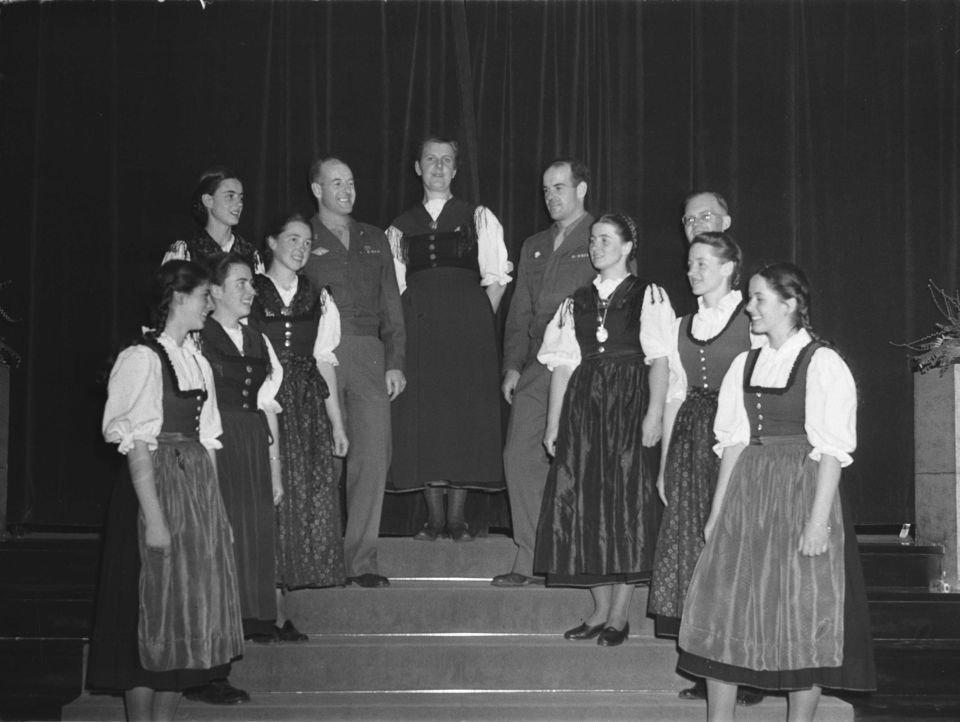
Under the continued guidance of Dr. Wasner, their repertoire evolved to appeal to American audiences while retaining its unique European flavor. They skillfully blended sacred music, madrigals, folk songs from various cultures, and classical pieces. Their performances were renowned for their purity of voice, precise harmonies, and heartfelt delivery. They dressed in traditional Austrian clothing, adding to their distinct appeal and creating an unforgettable stage presence.
The family toured extensively across the United States, performing in concert halls, churches, and community centers. They became a sensation, captivating audiences with their authenticity and the sheer joy they exuded through their music. As
The Trapp Family Singers: A Global Musical Journey from Salzburg to the USA explains, their hard work and dedication paid off, allowing them to purchase a farm in Stowe, Vermont, which would eventually become the Trapp Family Lodge. They continued to perform as a unit until 1957, when the children, now adults, began to pursue their own paths, though several family members remained active in music or related ventures.
Beyond the Alps: The Enduring Legacy of the Trapp Familie
The story of the Trapp Familie didn't end with their final performance. Their remarkable journey inspired multiple adaptations that cemented their place in popular culture. Maria von Trapp penned a memoir, "The Story of the Trapp Family Singers," published in 1949. This book served as the foundation for two successful German films in the mid-1950s, *Die Trapp-Familie* (1956) and *Die Trapp-Familie in Amerika* (1958), which were widely popular in Europe.
However, it was the 1959 Rodgers and Hammerstein Broadway musical *The Sound of Music*, and its subsequent 1965 film adaptation starring Julie Andrews, that brought the Trapp Familie global superstardom. While the musical took significant artistic liberties – condensing timelines, fictionalizing characters and events, and simplifying their escape – it beautifully conveyed the essence of their story: the power of music, faith, and family in the face of adversity. The real Trapp children, particularly Maria Franziska, sometimes noted the discrepancies between the musical and their actual lives, but they largely embraced its positive impact on sharing their family's message.
Today, the legacy of the Trapp Familie lives on. Johannes von Trapp, the youngest child of Georg and Maria Kutschera, is the last surviving member of the original Trapp Family Singers. The family's spirit of hospitality and their love for Vermont are preserved through the Trapp Family Lodge in Stowe, a popular destination that continues to welcome guests. It stands as a tangible reminder of their enduring impact and their incredible journey from Austrian nobility to American immigrants and musical legends. Their story is a powerful reminder that truth, even when adapted, can inspire generations with themes of courage, conviction, and the unbreakable bonds of family.
Did You Know? The real Captain von Trapp was an accomplished musician himself, often playing the accordion and mandolin. This shared passion for music was a significant factor in uniting his children and fostering their collective talent.
Conclusion
The Trapp Familie's story is much more than a delightful musical; it is a profound testament to the human spirit's capacity for resilience, courage, and unwavering faith. From their musical beginnings in Austria, refined under the guidance of Dr. Wasner, to their daring escape from Nazism and their subsequent success as the Trapp Family Singers in America, their journey was one of constant adaptation and perseverance. While *The Sound of Music* beautifully introduced their tale to millions, understanding the authentic details behind the fiction only deepens our appreciation for this extraordinary family. Their harmonious voices and principled choices echo through history, reminding us of the enduring power of music, the importance of standing by one's convictions, and the unbreakable bond of family that can overcome even the most formidable challenges.