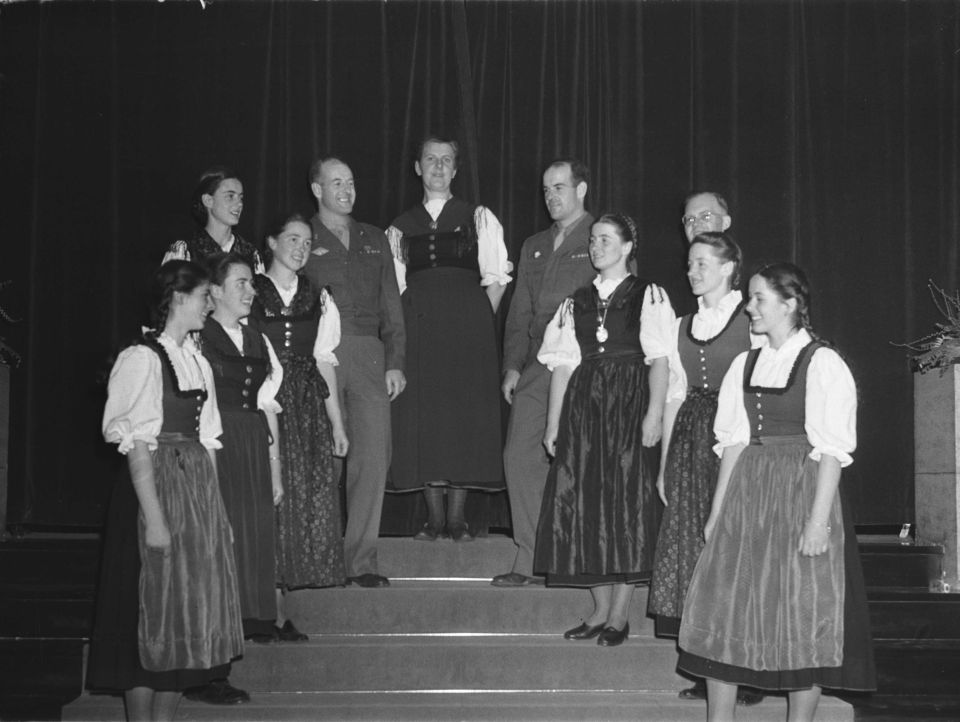
The Trapp Family Singers: A Global Musical Journey from Salzburg to the USA
The name Trapp Familie evokes images of alpine meadows, soaring melodies, and a heartwarming tale of family and resilience. Yet, the true story of the von Trapp family is far richer and more complex than its celebrated theatrical portrayal. From their aristocratic roots in Austria to their daring escape from Nazism and their remarkable transformation into the renowned Trapp Family Singers in the United States, their journey is a testament to the enduring power of music, faith, and unity against a backdrop of global upheaval.
This article delves into the authentic narrative of the Trapp Familie, tracing their captivating musical odyssey from the idyllic landscapes of Salzburg to the concert halls of America, cementing their legacy as one of the most beloved musical families in history.
The Genesis of a Musical Phenomenon: From Austrian Aristocracy to Choral Harmony
The foundation of the legendary Trapp Familie began with Georg von Trapp, a decorated commander in the Austrian Navy, whose life took an unexpected turn after the death of his first wife, Agathe Whitehead. He was left with seven children: Rupert, Agathe, Maria Franziska, Werner, Hedwig, Johanna, and Martina. In 1927, Georg married Maria Augusta Kutschera, a young governess originally hired to care for one of his ailing daughters. Together, they would have three more children: Rosmarie, Eleonore, and Johannes, completing a family of ten children that would soon become famous worldwide.
Music was an integral part of the von Trapp household, a cherished family hobby that provided solace and joy. By 1935, their amateur singing at the local church in Aigen caught the attention of Dr. Franz Wasner, a young priest with a keen ear and a profound understanding of sacred music. Wasner became their musical director, encouraging their burgeoning talent, refining their sound, and introducing them to a repertoire that blended traditional folk songs, madrigals, and ballads with sophisticated sacred compositions.
This disciplined approach transformed their familial pastime into a polished, professional act. Their breakthrough came in 1936 (some accounts say 1935) when, encouraged by German concert singer Lotte Lehmann, they entered and won first prize in a choral competition at the prestigious Salzburg Festival. This victory marked their official entry into the professional music world. The family, facing financial hardship after losing their savings during the Great Depression, began touring across Europe, enchanting audiences in Vienna, Salzburg, France, Belgium, the Netherlands, Italy, Germany, and England. They were no longer just a family who sang; they were becoming the celebrated Trapp Family Singers.
To understand the nuances of their early life and how it shaped their artistic identity, consider exploring The Real Trapp Family: From Austrian Singers to Sound of Music Inspiration, which sheds further light on their authentic beginnings.
A Daring Escape: From Salzburg's Peaks to Freedom's Shores
The harmonious life of the Trapp Familie in Austria was abruptly shattered with the ominous rise of Nazism. In March 1938, Adolf Hitler's forces annexed Austria, a political event known as the Anschluss. The von Trapps, staunchly anti-Nazi and deeply committed to their faith, refused to compromise their principles. They declined offers to perform for Hitler, resisted flying the Nazi flag, and Georg, a former naval officer, refused a commission in the German Navy.
Faced with escalating political pressure and the threat of persecution, the family made the courageous decision to escape. This was not a whimsical jaunt over the Alps as often depicted, but a calculated and perilous flight for freedom. They chose to abandon their beloved estate outside Salzburg, prioritizing their spiritual and moral well-being over material wealth.
In a move that highlighted their resourcefulness, Georg's Italian citizenship (he was born in Zadar, then part of Austria-Hungary, later Italy) provided a critical pathway. Disguised as a leisurely family outing, complete with knapsacks and mountaineering attire, the family discreetly left their home. Their journey took them by train through the Austrian Alps, across the border into Italy. From there, their escape continued through Switzerland and France to London. Interestingly, local historian Miep Smitsloo notes a brief but significant stay in Warmond, near The Hague, Netherlands, as guests of a Dutch banker, Ernest Menten, an episode often overlooked in popular accounts. Their ultimate destination was the United States, where they hoped to find safety and continue their musical careers.
Their arrival in New York in September 1938 marked the beginning of a new chapter, but also presented immediate challenges as refugees in a foreign land. For a deeper dive into the precise planning and incredible bravery involved in their escape, be sure to read Escaping Hitler: The Trapp Family's Daring Flight to America.
The Trapp Family Singers: Conquering America's Stages
Upon their arrival in the United States, the Trapp Familie, now officially known as the "Trapp Family Singers," faced the daunting task of rebuilding their lives and careers from scratch. Despite their European fame, they were largely unknown to American audiences. Their early years in America were marked by financial struggles and the challenge of adapting their classical European repertoire for a new cultural landscape. Initial concerts, often featuring solely sacred music, proved difficult to market.
However, under the shrewd management and guidance of people who believed in them, and with Dr. Wasner still at the helm as their conductor, they began to tailor their performances. They continued to present their signature blend of Austrian folk songs, classical pieces, and sacred music, but with an increased emphasis on accessibility and entertainment. Their unique appeal lay in their authentic, wholesome image, their pure, unamplified voices, and the undeniable charm of a large family singing in exquisite harmony. They embodied a spirit of unity and devotion that resonated deeply with American audiences.
The Trapp Family Singers toured extensively across the United States, performing in countless cities and building a devoted following. They recorded numerous albums, bringing their unique sound into American homes. Their performances were a cultural bridge, offering a taste of European artistry and tradition to a nation grappling with its own identity during wartime and post-war prosperity. They continued to perform professionally until 1957, having achieved remarkable success and establishing a beloved presence on the American musical scene.
Practical Tip: Visiting the Trapp Family's American Home
One of the most enduring legacies of the Trapp Familie in the USA is the Trapp Family Lodge in Stowe, Vermont. After years of touring, the family purchased a farm in Vermont in 1942, reminded of their beloved Austrian homeland by the rolling hills. Today, the lodge remains a successful business, run by the youngest son, Johannes von Trapp, and his family. Visitors can stay at the lodge, hike the trails, and immerse themselves in the family's history, experiencing a piece of Salzburg nestled in the Green Mountains.
Beyond the Footlights: The Enduring Legacy and The Sound of Music
Even after the Trapp Familie ceased performing as a unit in 1957, their story continued to captivate the public. It was Maria von Trapp's 1949 memoir, "The Story of the Trapp Family Singers," that truly laid the groundwork for their enduring fame. Her heartfelt account of their life, their music, and their escape resonated with readers, leading to two successful German films in the mid-1950s.
However, it was the 1959 Rodgers and Hammerstein Broadway musical, The Sound of Music, followed by the iconic 1965 film adaptation starring Julie Andrews, that catapulted the Trapp Familie into global superstardom. While the musical takes significant artistic liberties with the historical facts – condensing timelines, fictionalizing characters, and altering aspects of their escape – it beautifully captured the essence of their story: a family united by music, faith, and an unwavering commitment to freedom. The fictionalized narrative allowed the core themes of courage, love, and the transformative power of song to reach an unprecedented worldwide audience.
The musical and film introduced generations to the "hills are alive" and "Do-Re-Mi," shaping the public's perception of the family. It turned their personal saga into a universal tale of inspiration. Maria Franziska, one of the original seven children of Georg and Agathe, lived to be 99, passing away in 2014. Johannes von Trapp, the youngest child of Georg and Maria, remains the last surviving member of the original Trapp Family Singers, continuing to oversee the family's legacy through the Trapp Family Lodge.
Fact vs. Fiction: A Deeper Look
While The Sound of Music is beloved, it's important to remember it's a dramatization. For instance, the family didn't "hike over the mountains" directly into Switzerland from Salzburg; their escape was more complex and involved trains and multiple countries. Also, Maria was not a novice postulant when she married Georg; she had already been hired as a governess. The children's ages were also adjusted for dramatic effect. Understanding these differences enriches appreciation for both the real history and the timeless artistic creation.
Conclusion
The journey of the Trapp Familie is a compelling narrative that transcends mere musical performance. It is a chronicle of courage, adaptation, and the profound impact of shared values. From their early days singing folk songs in Salzburg to their refined performances across Europe, their dramatic flight from Nazi oppression, and their subsequent rise as cherished performers in America, the von Trapps demonstrated an extraordinary resilience. Their story, immortalized by their own music and later by *The Sound of Music*, continues to inspire millions, reminding us that even in the face of immense adversity, the human spirit, buoyed by family and music, can achieve harmony and enduring legacy across continents.